
Interior strip-outs & full guts · The Glebe
Interior demolition in the Glebe
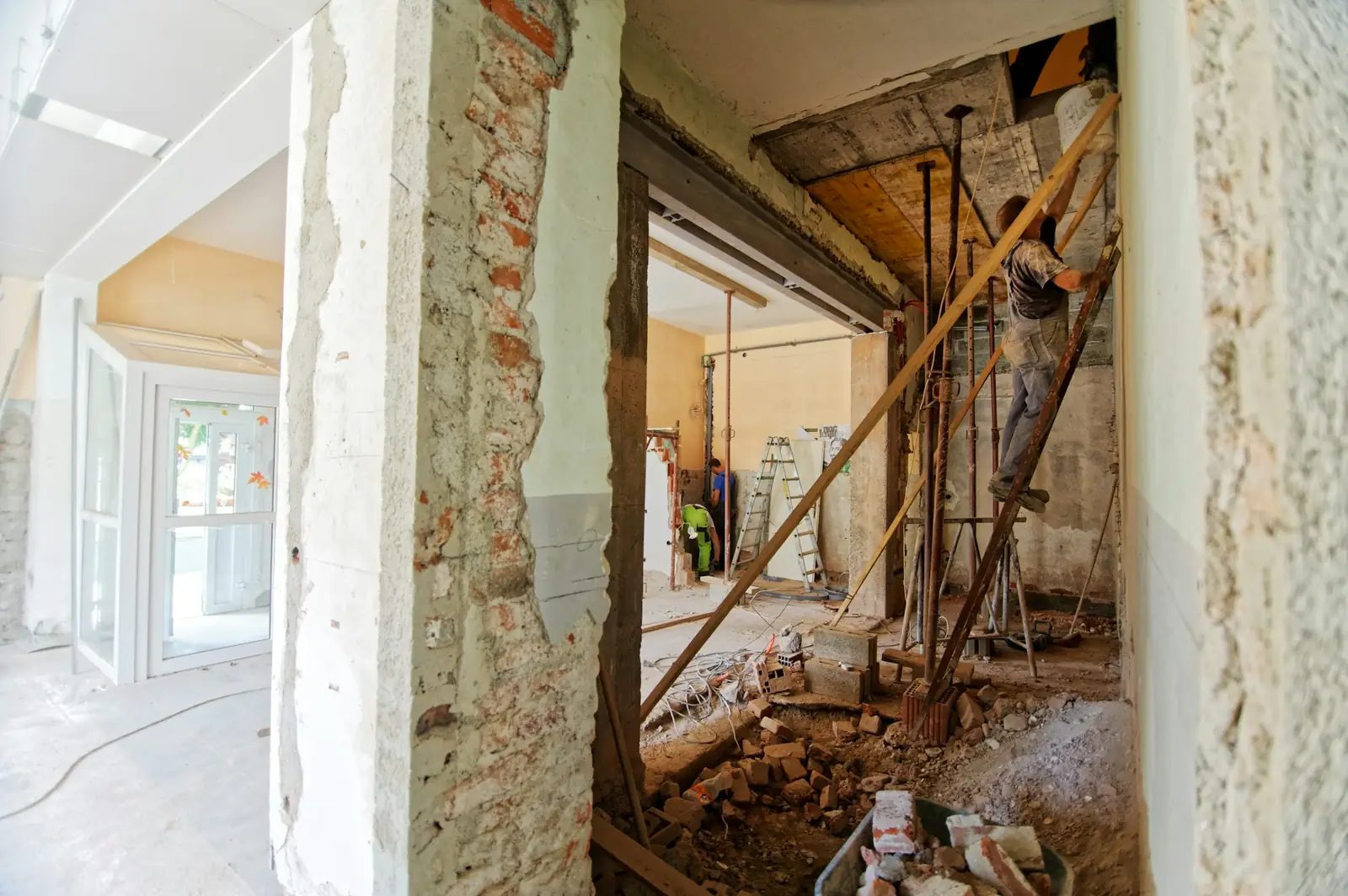
Glebe renovations usually keep the brick shell and rebuild the inside. We strip plaster, old finishes and tired basements, save the trim and features you want kept, and leave a clean frame for the next trade.
- The promise Ready for the next trade Debris hauled away, site cleared for the next crew.
- Demolition quotes Book a site visit We walk the job with you, then price it in writing.
- Junk removal Text us photos Send a few pictures, get a price back.
- Service area Ottawa & area Kanata to Orléans, Barrhaven to Vanier. Outside Ottawa? Ask us.
In The Glebe
What the work looks like in The Glebe
Most Glebe houses date from the early 1900s to the 1940s. Walls are typically plaster on wood lath, floors are original hardwood under later layers, and basements are low with stone or block foundations. A full gut here is heavy, careful work, and we plan it room by room.
Glebe owners often want to keep original details: trim, doors, built-ins and leaded glass. We mark everything that stays at the walkthrough, remove it by hand, label it and store it where you choose before the heavy work starts.
The Glebe was largely built in the first half of the 20th century: brick and frame houses, semis and row houses on narrow lots, many with plaster walls, original trim and low basements. More about The Glebe
Typical projects
- Full guts of early-1900s brick houses
- Plaster and lath removal with trim and doors saved
- Basement tear-outs ahead of lowering or waterproofing
- Kitchen and bathroom strip-outs in semis and row houses
Quoted on site
Demolition in The Glebe is priced in person. We walk the job, check access and the building’s age, then send a written quote.
Book a site visitPermits & paperwork
Before work starts in The Glebe
An interior strip-out does not need its own demolition permit; the City’s demolition page lists non-load-bearing interior partitions as exempt. The renovation that follows often needs a building permit, especially if walls, plumbing or structure change, so have it applied for before we start.
Check whether your address is in a heritage conservation district, such as Clemow Estate East or the Clemow-Monkland Driveway and Linden Terrace district. The City requires Demolition Control approval for heritage-designated properties, and the 2026 permit fee for a heritage-protected building is $3,510 (fee schedule).
Any building from before 1990 gets a hazardous materials survey first. If it finds asbestos or other designated substances, abatement is referred to licensed specialists, and our crew starts after the clearance letter.
Disposal
Torn out. Hauled out.
Every job ends ready for the next trade. Here is where the debris goes.
Drywall, plaster, tile, cabinets and flooring are bagged or carted out daily. Metal is pulled for scrap, and mixed debris goes to a licensed sorting facility rather than straight to landfill.
On larger jobs, a roll-off bin from a licensed bin company sits on your property, and the bin company hauls it away and handles the tipping at its own facility.
On smaller jobs our crew loads our own trucks and hauls to the Tomlinson Waste Recovery Centre at 106 Westhunt Drive in Carp, which sorts mixed construction and demolition debris for recycling and accepts commercial loads.
Narrow Glebe lots rarely have room for a bin, so debris is bagged and loaded to our trucks daily. A bin on the street needs a City temporary encroachment permit.
What’s included
- Floor protection on the carry route, poly dust walls and sealed furnace returns
- Cabinets, counters, drywall or plaster, tile, flooring, trim and fixtures removed
- Items you are keeping removed carefully and stacked where you choose
- Daily load-out and a final sweep and shop-vac, ready for framing or inspection
Full scope and exclusions: Interior Demolition & Strip-Outs · Full Interior Gut
Asbestos & permits
We don’t touch asbestos. That’s the point.
Some demolition companies will tell you they do it all. We do the demolition, and we make sure the steps before it happen in the right order, by the right people: survey first, licensed abatement, then us.
Read the asbestos and permit FAQ- Built before 1990? Ontario law puts the onus on the owner to identify designated substances before a contract is signed. That means a designated-substances survey.
- Survey finds asbestos? A licensed abatement contractor removes it, and you get a clearance letter.
- Utilities and permit. Gas, hydro, water and sewer disconnected where needed. Enbridge alone takes about 44 days, so it gets requested first.
- Then we demolish. No change orders for surprise asbestos, no stop-work orders, no crew exposed.
FAQ
Interior strip-outs & full guts in The Glebe: questions
My house is in a heritage conservation district. Can you still gut the interior?
Generally, yes. Heritage district plans focus on exteriors; the Clemow-Monkland Driveway and Linden Terrace plan, for example, lists interior alterations among work that does not need a heritage permit. Check your own district’s plan, and get heritage approval for anything that touches the exterior.
How do you get debris out of a narrow Glebe lot?
Bagged and carried to the front, then loaded daily. A bin goes on the driveway if there is one; a bin on the street needs a City encroachment permit, which we build into the schedule.
Is the plaster tested before you start?
Plaster and other materials in houses this age can contain asbestos, so a hazardous materials survey comes first. Licensed specialists handle any abatement, and we start after the clearance letter.
Can you work inside a heritage district home?
Yes. Interior work is generally outside heritage permits; the Clemow-Monkland district plan, for example, lists interior alterations among work that does not need one. Anything that changes the exterior needs heritage approval first.
More in The Glebe
Request a quote
Torn out. Hauled out. Ready for the next trade.
Demolition in The Glebe is quoted on site: book a visit and we walk the job with you. Junk removal? Text us photos.